
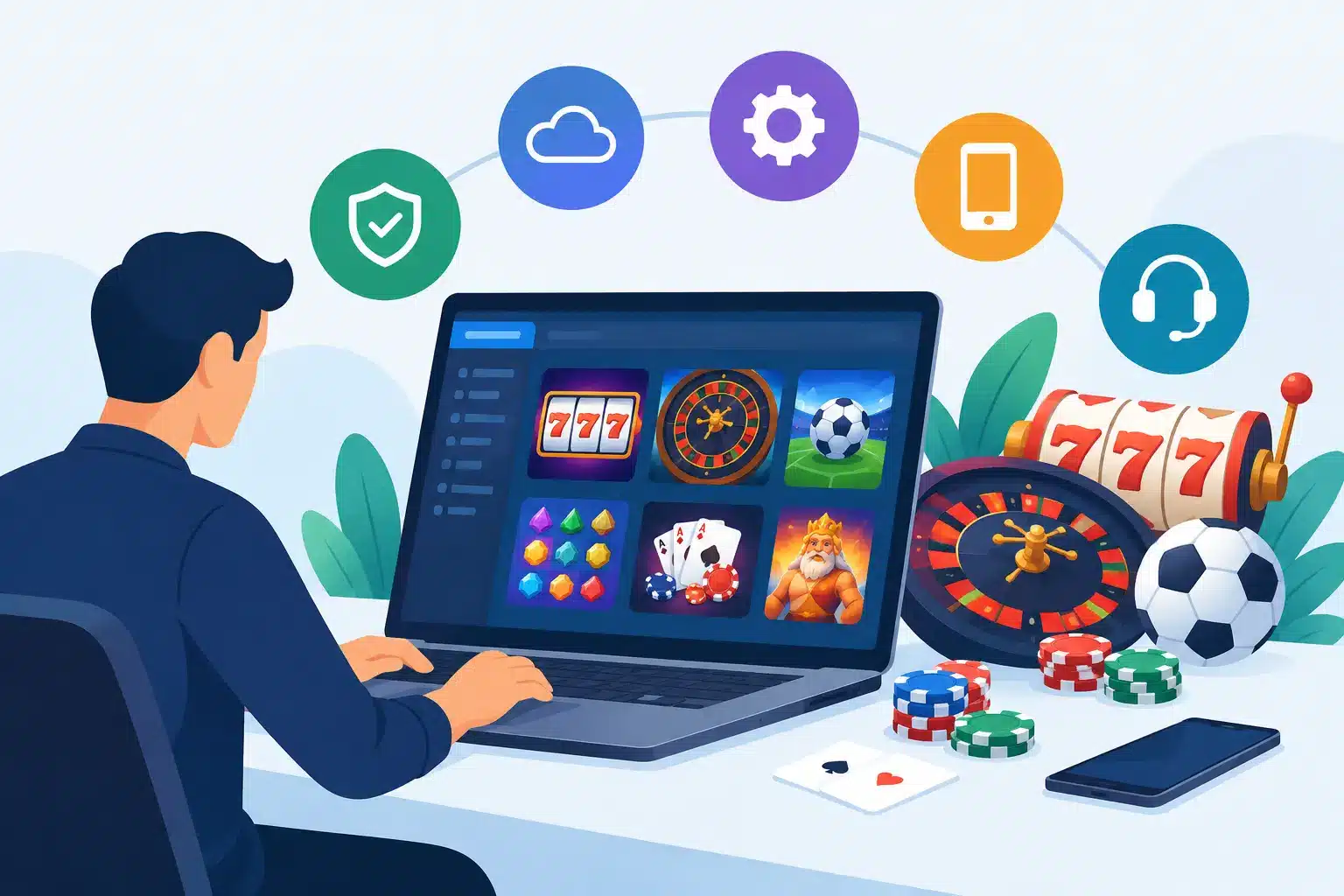
Launching an online casino or sportsbook is rarely delayed by the brand concept. It is delayed by disconnected game suppliers, payment failures, regulatory gaps, unstable back-office workflows, and technical teams forced to manage too many vendors. The right iGaming software company eliminates that fragmentation by supplying an operating foundation built for launch speed, transaction security, content access, and sustained growth.
For operators and platform owners, this is not a simple procurement decision. The software partner selected at launch will shape how quickly the business enters new markets, how efficiently teams manage players and promotions, and how confidently the platform performs under peak traffic. A low initial price can become expensive if it creates integration debt, weak reporting, or limited control over the customer experience.
What an iGaming Software Company Should Solve
An iGaming platform is an interconnected commercial system, not just a front-end casino lobby. It must manage player registration, identity controls, wallet activity, game sessions, bonuses, payments, reporting, support workflows, and third-party content relationships. A sportsbook adds live odds, bet settlement, risk settings, market availability, and event data to an already demanding environment.
When these components are sourced separately, operators inherit the burden of coordinating technical roadmaps, support tickets, release schedules, and data handoffs. Each additional vendor introduces another point of failure. A game provider integration may affect wallet logic. A payment update may require changes to player verification. A promotional campaign may expose limits in segmentation or bonus configuration.
A capable software provider reduces those dependencies through a unified architecture. That does not mean every operator needs the same configuration. A startup entering one jurisdiction may prioritize a turnkey platform and rapid content deployment, while an established operator may require custom workflows, API-level flexibility, and deeper control over its existing technology estate. The principle is the same: core systems should operate as one managed environment, not a collection of loosely connected tools.
Turnkey Speed Without Surrendering Control
A turnkey platform is often the most efficient route for operators that want to launch a branded product without building core infrastructure from scratch. The platform should cover the essential operating layer: web and mobile delivery, player account management, wallet functions, game access, promotion tools, reporting, and administration.
Speed matters, but speed alone is not a strategy. A fast deployment that cannot support brand customization, market-specific payment options, or future product expansion creates a short runway. Operators should assess how far a white-label model can be configured before it becomes restrictive.
The most practical approach is a platform that provides a proven core while allowing control over the elements that shape commercial performance. This includes brand identity, lobby structure, game categories, player journeys, bonus rules, regional content availability, and operational permissions. Teams should be able to act quickly without waiting on development resources for every campaign adjustment or customer service requirement.
Back-Office Capability Is a Commercial Advantage
The player-facing product gets attention, but back-office performance determines whether an operation can scale responsibly. Operators need a clear view of player activity, deposits, withdrawals, bonus exposure, gaming behavior, and support history. Fragmented data slows decisions and increases operational risk.
A strong back office enables role-based access, user management, reporting, CRM segmentation, bonus configuration, and transaction monitoring from a central control point. It should give operations, marketing, finance, and compliance teams the information they need without creating conflicting versions of the truth.
For growth-focused businesses, reporting should support action, not merely record activity. Teams need to identify high-value player segments, assess campaign outcomes, monitor payment conversion, and detect unusual transaction patterns. The value comes from making better decisions faster while maintaining governance over sensitive data.
API Aggregation Determines Content Reach
Game content is a major driver of acquisition and retention, yet direct integration with every studio is resource-intensive. Each supplier can introduce separate contracts, technical specifications, certification requirements, game launch processes, and support channels. The overhead grows quickly as an operator expands its portfolio.
A unified API changes the operating model. Instead of managing multiple point-to-point connections, the operator accesses aggregated casino content through a single integration layer. This can include slots, live casino, table games, instant games, and other formats, depending on the provider’s network and market coverage.
The quality of an aggregation solution is not measured only by the number of games listed in a catalog. Operators should ask whether game metadata is consistent, whether titles can be enabled by market, whether promotional mechanics are supported, and how quickly new releases become available. Content breadth has limited commercial value if it is difficult to organize, report on, or deploy in the right jurisdictions.
An API strategy should also support future flexibility. Operators may begin with a focused casino portfolio, then add studios, launch localized categories, or introduce sportsbook functionality. Architecture that supports expansion protects the business from a disruptive replatforming project later.
Payment Infrastructure Must Match Player Behavior
Payment friction is one of the fastest ways to lose a depositing player. A platform can have compelling content and a refined user interface, but the experience fails if deposits are declined, withdrawal processes are unclear, or preferred local methods are unavailable.
Payment infrastructure should support multiple currencies, configurable deposit and withdrawal methods, transaction monitoring, and clear wallet reconciliation. For international operations, localization is particularly important. Payment preferences vary by region, and the ability to add appropriate methods can directly affect conversion and retention.
Crypto readiness may also be relevant, but it should be evaluated as an operational capability rather than a marketing label. Operators need clear controls around wallet flows, exchange logic, risk management, reporting, and compliance expectations in their target markets. The right approach depends on jurisdiction, player base, and business model.
Security is equally central. Sensitive player and payment data must be protected through secure architecture, controlled access, monitoring, and disciplined operational processes. A provider should be able to explain how transactions are handled, how data is protected, and how the platform maintains continuity when traffic or transaction volume rises.
Scalability Is Proven Under Pressure
Many platforms perform adequately at low volume. The real test arrives during a major sporting event, a high-performing acquisition campaign, a jackpot-driven traffic spike, or a payment processor disruption. At that point, performance is no longer a technical metric confined to IT. It affects revenue, player trust, support costs, and brand reputation.
Operators should evaluate platform capacity, uptime performance, monitoring practices, incident response procedures, and release management. Questions about support coverage matter as much as questions about features. If a critical issue occurs outside standard business hours, who owns the response, how are updates communicated, and what is the expected escalation path?
Certified software and enterprise-grade infrastructure provide meaningful signals, but buyers should still examine how these claims translate into day-to-day operations. Reliable performance requires more than hosting capacity. It depends on tested integrations, disciplined deployment processes, database resilience, security controls, and teams that understand the pressures of gaming operations.
Selecting the Right iGaming Software Company
The best partner is not necessarily the provider with the longest feature list. It is the one whose architecture, commercial model, and delivery capability align with the operator’s launch plan and growth targets. Before selecting a vendor, decision-makers should establish which capabilities must be available at launch and which can be introduced in phases.
A productive evaluation should cover four areas: platform scope, integration depth, operational control, and support accountability. Platform scope defines what is included across casino, sportsbook, payments, and back-office functions. Integration depth reveals whether content and services can be managed through a coherent API environment. Operational control shows whether internal teams can run the product efficiently. Support accountability clarifies how the provider responds when business-critical issues arise.
Gameifylabs is positioned for operators that need this consolidated model: turnkey platforms, aggregated gaming access, payment infrastructure, and custom development capacity within a single technology partnership. For businesses entering competitive markets, consolidation can shorten deployment cycles while reducing the operational drag of managing a fragmented vendor stack.
The strongest software decision is one that keeps the operator focused on its real differentiators: brand, market strategy, player experience, and commercial execution. Infrastructure should not become the obstacle to growth. It should give the business the control and confidence to move when the market does.



DiscussionHave a technical perspective or question?Open discussion