
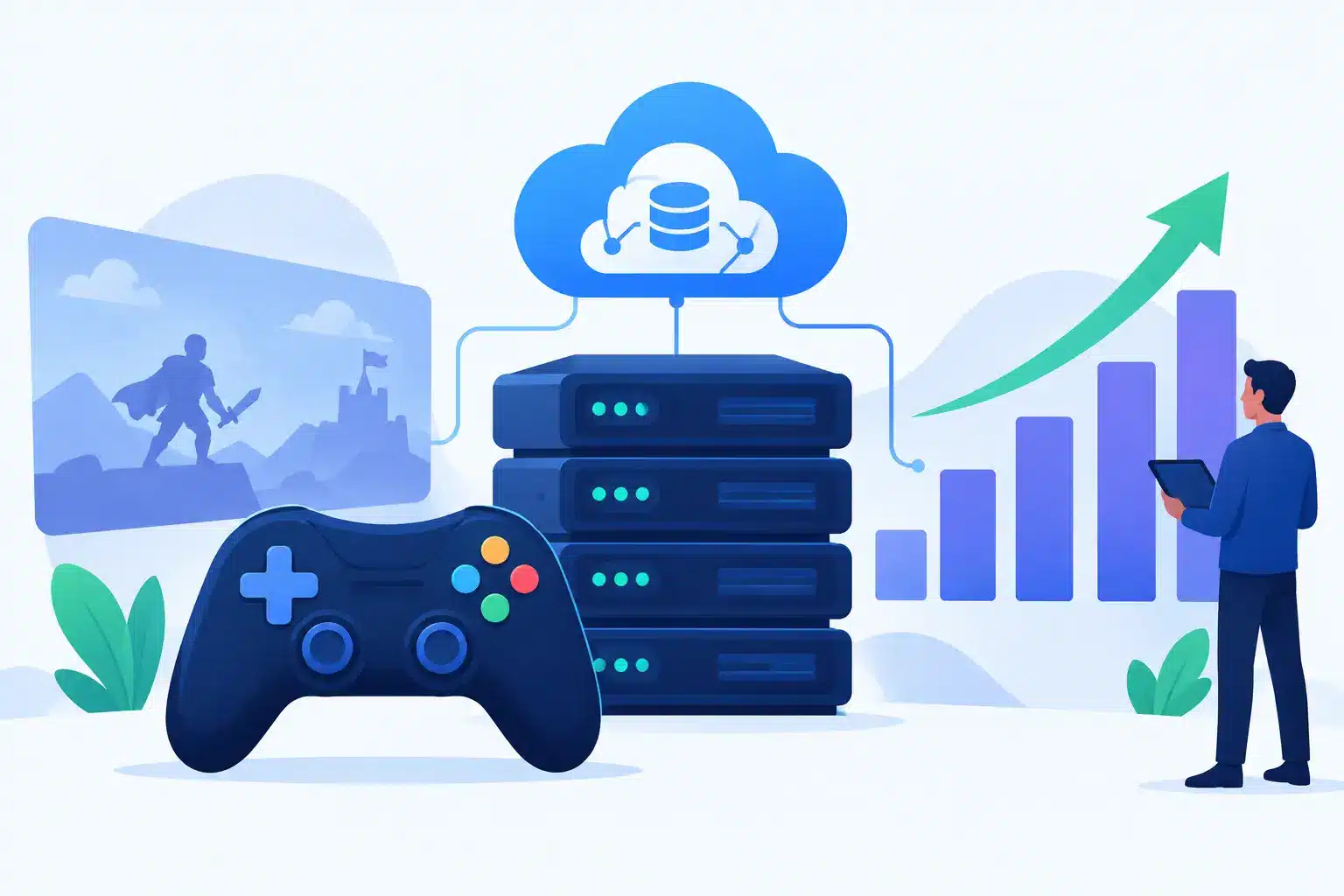
A gaming backend platform is where an operator’s commercial strategy either becomes executable or breaks under operational pressure. The front end may carry the brand, promotions, and player experience, but the backend determines whether games load reliably, payments reconcile correctly, risk rules are enforced, and teams can act on real-time data.
For online casino, sportsbook, and digital entertainment businesses, this is not a secondary technology decision. It is the operating foundation for market entry, content expansion, player lifecycle management, compliance workflows, and long-term margin control. The right platform reduces vendor sprawl and gives operators a faster path from product ambition to a launch-ready gaming business.
What a Gaming Backend Platform Must Control
A serious backend is more than a database connected to a player account system. It is the control layer that coordinates multiple high-stakes services: game providers, sports feeds, wallets, payment methods, bonuses, identity checks, reporting, and support operations. Each service has its own data model, failure points, commercial rules, and regulatory implications.
When these connections are managed through separate vendors and custom point-to-point integrations, complexity grows quickly. A content change can affect wallet behavior. A payment failure may create a support case, a bonus eligibility issue, and a reporting discrepancy at the same time. Operations teams lose time moving between dashboards, while product teams wait on engineering work for changes that should be configurable.
A unified platform centralizes these workflows. It gives the operator a common view of player activity, transaction status, game performance, and operational exceptions. More importantly, it creates clear ownership. Instead of diagnosing which vendor is responsible for a failed action, teams can monitor events, investigate issues, and apply controls from one operational environment.
Player, wallet, and transaction logic
The wallet is the financial core of an iGaming operation. It must process deposits, withdrawals, wagers, wins, reversals, bonuses, and adjustments without creating conflicting balances. That requires reliable transaction handling, audit trails, idempotent processing, and clear settlement logic across every connected product.
This is especially relevant for operators offering casino and sportsbook under one brand. A player expects one account and one available balance, even when activity passes through different suppliers. The backend must maintain that consistency while preserving the detailed records finance, risk, and compliance teams need.
Multi-currency capability adds another layer. Operators entering international markets need to manage local currencies, exchange rules, payment preferences, and, where commercially and legally appropriate, crypto-ready payment flows. The platform should support localized payment options without forcing teams to rebuild the core wallet for every new market.
Content aggregation without integration overload
Game content is a commercial differentiator, but every direct provider integration creates technical and operational maintenance. Different APIs, launch protocols, game metadata, promotional mechanics, reporting formats, and incident processes can consume substantial internal resources.
A well-designed aggregation layer standardizes access to multiple studios through a single API. This does not remove the need for commercial due diligence or market-specific content decisions. It does, however, reduce the engineering burden of adding, managing, and replacing suppliers.
The value is speed with control. Product teams can expand a lobby, activate approved content, and respond to player demand without treating every provider addition as a separate platform project. Technical teams retain a consistent integration model, while operators gain broader content access and a cleaner route to supplier diversification.
Why Architecture Determines Speed to Market
Speed to market is often discussed as a design or project-management issue. In practice, it is largely an architecture issue. A platform built on reusable services, clear APIs, configurable back-office tools, and standardized integrations can support a focused launch plan. A fragmented stack creates dependency chains that extend every release.
The difference is visible during common launch decisions. An operator may need to introduce a new payment method, open a currency, adjust bonus conditions, create a player segment, or add a supplier before a campaign goes live. If these actions require separate development cycles across several vendors, commercial timing becomes difficult to control.
A configurable gaming backend platform allows operations teams to make approved changes through governed controls rather than source-code changes. That does not mean every setting should be available to every user. Enterprise-grade systems apply role-based access, approval paths, and full activity logs so that flexibility does not undermine security.
The back office is a revenue system
Back-office management is often treated as an administrative requirement. It should be treated as a performance system. The quality of its tools affects how quickly teams identify high-value players, resolve payment issues, investigate suspicious activity, and measure campaign results.
A capable back office brings player profiles, transaction histories, gameplay data, bonus activity, communications, and support notes into a usable operational view. Teams should be able to segment players based on meaningful behavior, not export data repeatedly into disconnected systems before every decision.
The best configuration depends on the operator’s model. A startup may prioritize fast activation, straightforward campaign controls, and managed operational support. An established enterprise may need deeper permissions, custom reporting, multiple brands, and integrations with existing CRM or business intelligence systems. The platform should support both paths without forcing a complete replatform when the business matures.
Security and Compliance Cannot Be Bolted On
Gaming platforms process sensitive personal information and financial transactions at high volume. Security must be designed into the architecture, from authentication and access controls to encryption, data retention, monitoring, and incident response.
For regulated operations, compliance also affects product behavior. Geographic restrictions, responsible gaming controls, player verification workflows, transaction monitoring, reporting requirements, and auditability must be considered early. Treating these functions as late-stage additions creates delays and raises operational risk.
Certification-ready software and disciplined release processes matter because operators need confidence that platform changes will not destabilize critical functions. High availability, recovery planning, and continuous monitoring are commercial requirements. When downtime interrupts deposits, wagering, or withdrawals, the impact reaches revenue, player trust, affiliate performance, and support volume immediately.
A strong technology partner should be transparent about where responsibility sits. The operator remains accountable for its licensing obligations and market rules. The platform provider must supply the controls, documentation, technical safeguards, and support model needed to operate within that responsibility.
How to Evaluate the Platform Behind the Product
Decision-makers should assess a backend against real operating scenarios, not only feature lists or demo screens. Ask how it handles a failed deposit during peak traffic, a disputed withdrawal, a provider outage, a bonus abuse pattern, or a rapid launch into a new jurisdiction. The answers reveal more than a polished interface.
Evaluate these five areas closely:
- Integration model: Confirm whether games, sportsbook, payments, CRM tools, and third-party services connect through documented, maintainable APIs rather than one-off custom work.
- Operational control: Review player management, wallet controls, permissions, reporting, campaign configuration, and the ability to investigate events without relying on engineering.
- Scalability: Test how the architecture handles concurrent activity, transaction volume, new brands, additional suppliers, and geographic expansion.
- Security and governance: Examine access management, audit logs, data protection practices, monitoring, and the process for deploying updates safely.
- Support and accountability: Define incident escalation, service expectations, ownership boundaries, and the level of technical support available after launch.
There is no single ideal deployment model. A turnkey white-label platform can be the right choice for a business that needs to establish a branded presence quickly with proven infrastructure underneath. A custom development program may fit an operator with distinct product logic, internal technical capacity, and a clear reason to own more of the stack. Many growth-stage businesses need a hybrid approach: a proven core platform with custom modules where differentiation produces measurable value.
Build for the Next Market, Not Only the First Launch
The first launch is a milestone, not the finish line. As an operator grows, it will face more suppliers, more player segments, higher transaction volumes, additional brands, local payment expectations, and stricter reporting demands. Infrastructure that works only for the initial market becomes a constraint at the moment growth begins to accelerate.
This is why vendor consolidation has strategic value. Fewer disconnected systems mean fewer data gaps, fewer support handoffs, and greater visibility over the commercial engine of the business. It also gives leadership a more accurate picture of performance across products and markets.
Gameifylabs approaches this challenge as an infrastructure partner, combining unified API access, turnkey platform capability, payment infrastructure, back-office management, and custom development support for operators that need execution without fragmented technology ownership. The goal is not simply to launch a product. It is to establish a platform that can carry the business through its next market, next supplier decision, and next stage of scale.



DiscussionHave a technical perspective or question?Open discussion