
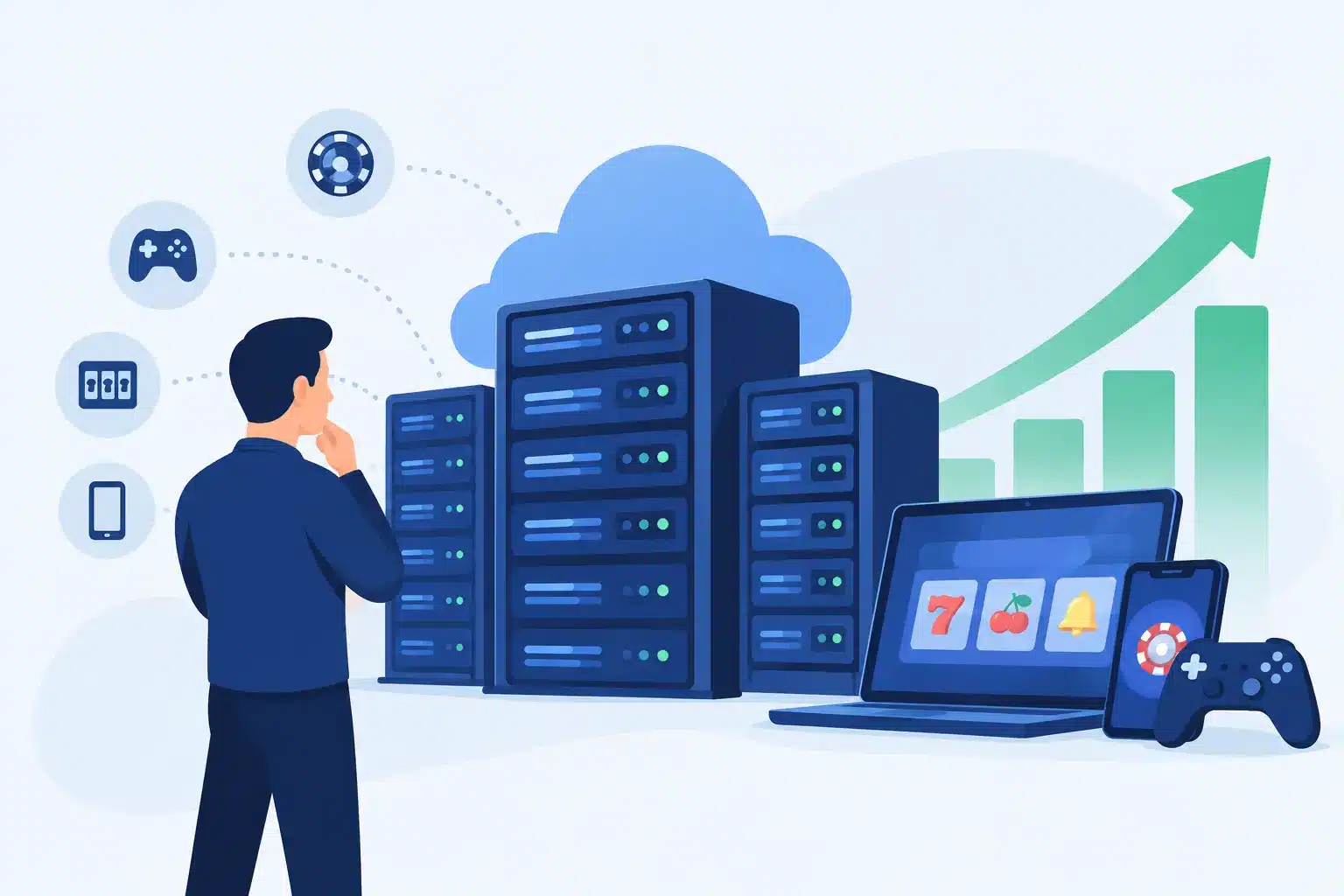
A launch can look complete from the player’s screen while critical operational problems are already building underneath it. Content providers may be connected through separate integrations, payment failures may require manual reconciliation, and support teams may have no clear view of a player’s full transaction history. Selecting an igaming backend provider is therefore not a procurement detail. It is an infrastructure decision that determines how quickly an operator can launch, how efficiently teams can run the business, and how far the platform can scale.
For operators entering a competitive or regulated market, the goal is not simply to acquire software. The objective is to establish a technical foundation that supports commercial growth without creating a fragmented vendor environment that becomes harder to manage every quarter.
What an iGaming backend provider actually delivers
The backend is the operating layer behind an online casino, sportsbook, or broader digital gaming product. It connects the front-end experience to the systems responsible for player accounts, wallets, game content, payment transactions, reporting, risk controls, promotions, and administration.
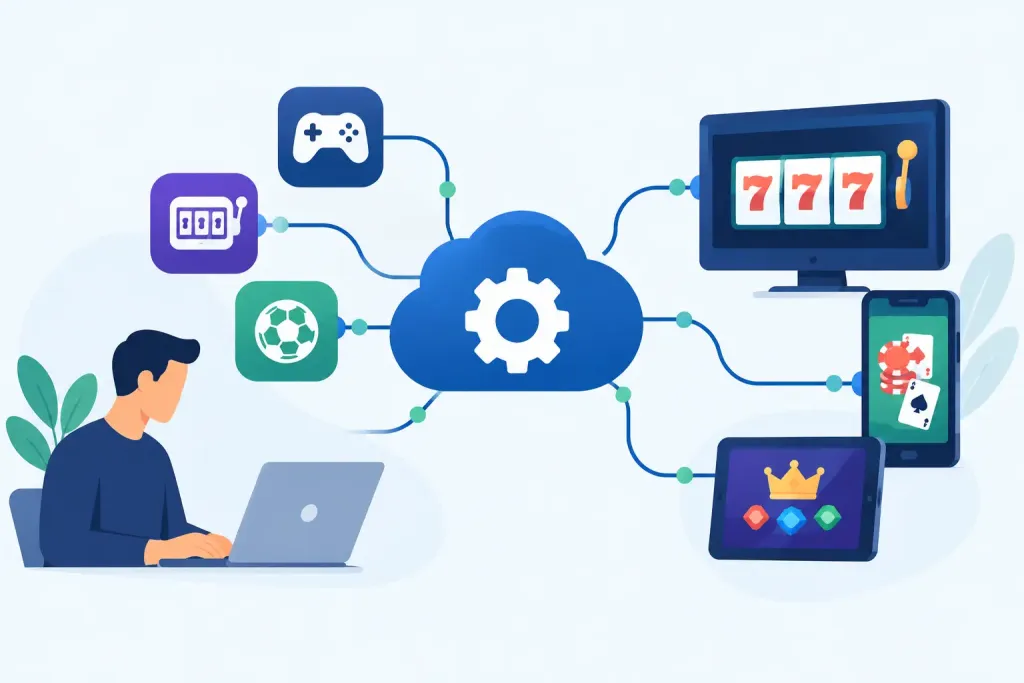
A capable iGaming backend provider gives operators a centralized way to manage these functions. Rather than asking internal teams to maintain individual connections for every game studio, payment method, and operational workflow, the provider brings those capabilities into a coordinated platform architecture.
This distinction matters when a business moves beyond its first market or first product. A platform built from isolated components can work at low volume. As player activity grows, however, teams must resolve inconsistent data, duplicated account logic, delayed reporting, and unclear accountability between vendors. Centralized infrastructure reduces that operational drag.
For many businesses, the right model includes a unified API, a configurable back office, wallet and user management, content aggregation, payment infrastructure, and the ability to support custom product requirements. The exact mix depends on the operating model, but the architecture should give decision-makers control without forcing them to build commodity systems from scratch.
The core capabilities to evaluate
Unified API and content aggregation
Game content is a commercial driver, but every direct integration adds technical and operational overhead. A unified API gives operators a single connection point for accessing casino games, live dealer products, sportsbook feeds, and other digital entertainment content where applicable.
The value is not merely faster integration. It is consistency. Game launch processes, session handling, wallet communication, reporting logic, and provider management should follow an organized structure. This allows product teams to expand the catalog without creating a separate maintenance project each time a new supplier is added.
Content breadth should still be assessed carefully. An extensive portfolio has limited value if it does not serve the operator’s target jurisdictions, player preferences, commercial model, or certification requirements. Ask how content is segmented by market, how new providers are added, and how quickly the platform can activate approved titles.
Back-office control and data visibility
Operators need more than dashboards with headline numbers. They need an administrative environment that supports real decisions: reviewing player activity, managing account status, monitoring bonuses, investigating transactions, configuring limits, and understanding performance by market, product, and payment channel.
A strong back office brings operational data into one environment. This is particularly important for customer support, fraud and risk teams, finance, and CRM operations. When each department works from a different system, simple cases take longer to resolve and data confidence declines.
The right level of control depends on the client. A startup may prioritize preconfigured workflows that reduce the burden on a small operations team. An established platform owner may require deeper role permissions, custom reporting, business intelligence exports, and tailored administration logic. The provider should support both speed and controlled customization.
Payment infrastructure built for market reality
Payments are where player experience, revenue operations, and regulatory obligations meet. A deposit that fails unnecessarily can end an acquisition journey. A withdrawal process that lacks clear controls can increase risk exposure. A payment stack that cannot support local preferences can limit market performance before the brand has gained traction.
Evaluate support for multiple currencies, crypto-ready payment modules where permitted, localized payment options, transaction monitoring, reconciliation, and configurable approval workflows. Just as importantly, assess how payment data flows into the wallet, player profile, reporting environment, and support tools.
No payment setup is universal. A business targeting one regulated market may need a narrow set of highly reliable local methods. A multi-market brand may need broader currency handling and a structured process for adding payment partners. The backend should accommodate this growth without requiring a platform redesign.
Security, performance, and architecture
An operator cannot treat uptime and data protection as claims to review after launch. They are baseline requirements. The provider’s architecture must be designed to handle peak activity, protect sensitive information, maintain accurate transaction records, and recover predictably when an incident occurs.
Technical due diligence should cover hosting approach, redundancy, access controls, encryption practices, monitoring, audit logging, incident response, disaster recovery, and release management. Certified software and documented compliance capabilities add confidence, but buyers should also examine the practical operating model behind them.
Performance needs should be tested against the business plan, not generic traffic assumptions. A casino campaign, major sports event, or a high-value affiliate launch can create sudden load. Ask how the platform handles concurrency, what support escalation looks like during critical periods, and whether service levels match the commercial risk of downtime.
How to choose an iGaming backend provider
The strongest selection process starts with operating requirements rather than a feature checklist. Define the markets you intend to serve, the licenses and regulatory expectations that apply, the content categories you need, your payment priorities, and the internal capabilities you already have.
Then assess each provider on the questions that affect long-term execution. Can the system launch a branded product quickly? Can it support your market entry requirements? Does it consolidate essential integrations? Can your team operate it without relying on the provider for every routine change? Is the architecture prepared for added brands, currencies, jurisdictions, and traffic?
Integration ownership deserves close attention. A vendor may advertise a large ecosystem, but the key question is whether those connections are maintained, monitored, and supported through a clear accountability model. When a game session, wallet transaction, or payment callback fails, your operations team needs a direct path to resolution.
Commercial flexibility also matters. Turnkey platforms can accelerate market entry significantly, especially for companies that do not want to fund a full platform build. Custom development may be appropriate when differentiated user journeys, proprietary logic, or unusual operational workflows are central to the business model. In many cases, the practical answer is a proven core platform with targeted customization around the areas that create genuine competitive value.
Avoiding fragmented platform growth
Fragmentation usually does not arrive as a single bad decision. It develops through reasonable short-term choices: one provider for content, another for payments, a separate CRM tool, a custom wallet service, and reporting assembled later. Each addition may solve an immediate need, but the overall stack becomes harder to govern.
The costs appear in slower releases, reconciliation work, competing data records, longer support investigations, and a growing dependence on specialized technical knowledge. These issues can delay expansion at the moment the business should be moving faster.
A consolidated backend does not mean accepting a closed system with no flexibility. It means establishing a clear platform center where core data, wallet logic, user management, integrations, and operating controls are coordinated. APIs and custom development can then extend the business without compromising that center.
Gameifylabs approaches this requirement as a B2B infrastructure challenge, combining unified integrations, turnkey platform capability, payment modules, and back-office management for operators that need launch speed alongside enterprise-level control.
Build for the operating model you want
The best backend decision is not based on the longest feature list. It is based on whether the platform supports the organization you intend to become. A lean launch team needs automation and dependable vendor support. A scaling operator needs stable infrastructure, clear data ownership, and the ability to add markets without multiplying complexity. An enterprise platform owner may need deeper configuration and custom development within a controlled technical framework.
Choose the provider that can support the next stage of the business while giving your team the control to execute now. When the infrastructure is designed around real operational demands, growth becomes a managed process rather than a series of expensive technical corrections.


DiscussionHave a technical perspective or question?Open discussion