

A weak platform decision rarely fails on launch day. It fails later, when a new market requires another payment method, a high-value player needs support, game content must be reconciled, or peak traffic exposes a bottleneck. The right iGaming software provider is not simply a vendor supplying games or a website. It is the technology foundation behind your ability to launch, operate, and grow a gaming business with control.
For operators, founders, and platform owners, the question is not which platform has the longest feature list. The real question is whether the provider can reduce integration complexity while giving the business the architecture, data access, and operational flexibility needed to compete.
What an iGaming Software Provider Should Deliver
An iGaming operation is a connected system. Player acquisition, account registration, wallets, game sessions, betting, payments, fraud controls, reporting, customer support, and compliance workflows all depend on the same underlying infrastructure. When these functions are spread across disconnected vendors, every update becomes slower and every incident becomes harder to diagnose.
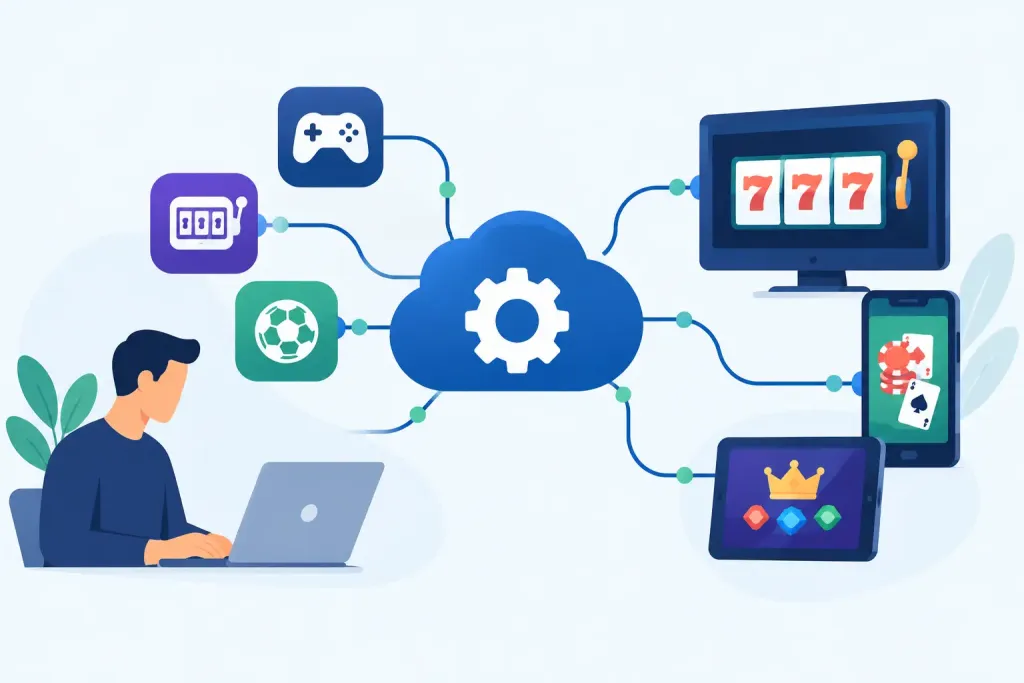
A capable provider brings these layers together through a coherent platform strategy. That typically includes a white-label casino or sportsbook environment, a unified API for content aggregation, player account and wallet management, payment gateway infrastructure, back-office controls, and reporting tools. The objective is not to remove every third-party relationship. It is to ensure that integrations are governed through one dependable technical layer rather than an improvised vendor stack.
This distinction matters most when speed is a commercial requirement. Building a proprietary platform from the ground up may offer maximum control, but it requires substantial product, engineering, security, QA, and operations capacity. A turnkey platform can shorten time to market dramatically, provided its configuration options, API structure, and back-office capabilities do not limit the business after launch.
Start With the Operating Model, Not the Game Catalog
Game selection is commercially important, but it should not be the first filter. A large catalog has limited value if the platform cannot handle the operational demands around it. Before comparing providers, define the model you intend to run.
Will the business enter one jurisdiction or several? Is the priority online casino, sportsbook, or a combined product? Will you operate under your own license, work with local partners, or prepare for future market expansion? Do you need a fully branded white-label deployment, or an API-first infrastructure layer that plugs into an existing product?
These decisions shape the technical requirements. A startup focused on rapid market entry may prioritize ready-to-configure onboarding flows, pre-integrated payments, and a managed back office. An established operator may place greater weight on migration planning, custom player journeys, data portability, and integration with CRM, risk, or business intelligence systems.
The strongest procurement process translates commercial goals into measurable platform requirements. For example, instead of asking whether a platform supports multiple currencies, ask how currencies are configured across player wallets, bonuses, reporting, and payment settlement. Instead of asking whether crypto is available, ask which wallet logic, monitoring controls, and reconciliation workflows support it.
White-Label, Turnkey, and Custom Development Have Different Trade-Offs
A white-label solution is designed for speed. The core infrastructure is already established, while the operator configures branding, content, market settings, payment methods, and promotional logic. This model suits businesses that need to validate a market or launch a branded product without funding a full internal engineering organization.
A turnkey platform adds broader operational readiness. It should provide not only the front-end experience but also the back-office environment required to manage users, transactions, content, risk controls, and reporting. The quality of this administrative layer often determines whether operations teams can act quickly without creating a constant queue for developers.
Custom development is appropriate when the operator has differentiated workflows, complex legacy integrations, or product requirements that cannot be met through configuration. However, custom work should be targeted. Rebuilding standard platform functions simply because they can be rebuilt increases delivery risk and long-term maintenance cost. A practical approach is to use proven core infrastructure while investing custom development effort where it creates a real market advantage.
Evaluate the Architecture Behind the Interface
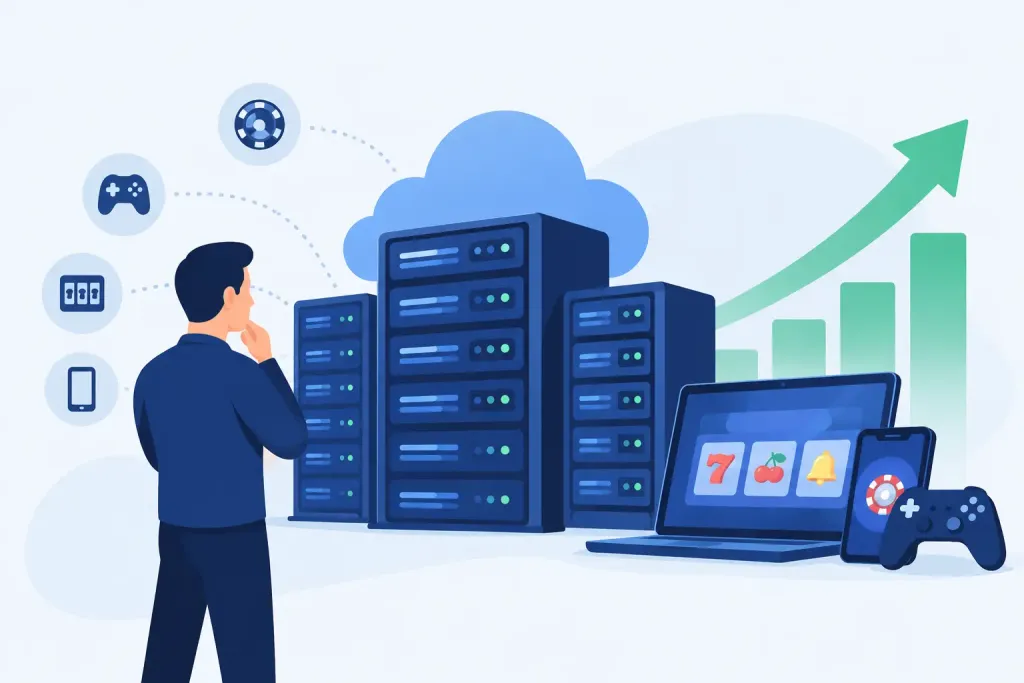
A polished front end can conceal an unstable platform. Decision-makers should examine the architecture that supports transaction processing, game sessions, player balances, and back-office activity under load.
High-performance infrastructure requires more than fast page rendering. It means the platform can process concurrent activity without corrupting wallet states, delaying bet settlements, or creating inconsistencies between providers and internal reports. It also means failures are isolated where possible, monitored continuously, and handled through documented recovery procedures.
Ask how the platform manages uptime, traffic spikes, release deployments, database performance, and incident response. Request clarity on service-level commitments, monitoring coverage, backup processes, and the path for escalating a production issue. Enterprise-grade stability is not a marketing phrase when player funds, operator revenue, and brand reputation are involved. It is an operational requirement.
Security deserves the same level of scrutiny. The provider should demonstrate secure access controls, encrypted data handling, role-based permissions, auditability, and disciplined environment management. For regulated operations, certification and compliance alignment may also be decisive. Requirements vary by jurisdiction, so avoid assuming that a platform certified for one market is automatically ready for another.
A Unified API Reduces Cost Beyond Launch
API quality affects nearly every team in the business. A fragmented integration model forces developers to maintain separate connections for game studios, sportsbooks, payment services, identity tools, and analytics products. Each connection introduces its own authentication model, data format, support process, and update cycle.
A unified API changes that equation. It provides a consistent method for accessing aggregated content and platform services, reducing the number of direct technical relationships the operator must maintain. This can accelerate initial integration, but the larger benefit appears over time: fewer dependencies to monitor, clearer ownership when issues occur, and a more manageable path for adding content or expanding into new markets.
The API should still be evaluated in detail. Look for clear documentation, stable versioning, sandbox access, predictable error handling, webhooks or event capabilities where needed, and support that can engage directly with technical teams. An API that is easy to demonstrate but difficult to operate at scale creates costly friction after launch.
Payments and Back-Office Control Are Revenue Infrastructure
Payment localization is one of the most underestimated constraints in iGaming expansion. Players expect familiar deposit and withdrawal methods, while operators need dependable transaction status, fraud controls, reconciliation, and visibility into exceptions. A payment gateway must work as part of the platform rather than as an isolated checkout component.
Assess whether payment modules support the currencies, settlement needs, and local methods relevant to your growth plan. Multi-currency wallet logic, crypto readiness, withdrawal approvals, limits, and transaction reporting should be visible to authorized operations teams. The best approach depends on the markets being served. A payment mix that converts well in one region may be ineffective or unsuitable in another.
Back-office capabilities are equally commercial. Teams need to manage player profiles, account restrictions, bonuses, support cases, payment reviews, and operational reporting without relying on engineering for routine actions. Granular user roles are essential: finance, support, marketing, risk, and administrators should have the access they need without receiving unnecessary control over sensitive functions.
Choose a Partner That Can Support the Next Stage
Provider selection should account for what happens after the first release. A platform that supports a quick launch but cannot accommodate additional brands, markets, content partners, or payment methods may force an expensive migration at the point of growth.
Ask how new integrations are prioritized, how custom development is scoped, and who owns the relationship after implementation. Evaluate the provider’s ability to support technical, product, and operational stakeholders, not just the initial sales process. Clear delivery governance, realistic timelines, and accountable support matter more than broad promises.
Gameifylabs approaches this challenge as an infrastructure partnership: unified API access, turnkey platform capabilities, payment infrastructure, and custom development can operate within one technology strategy rather than a collection of disconnected tools. For operators, that consolidation can turn platform complexity into a more controlled operating model.
The most useful final test is practical: imagine the business 12 months after launch, with more players, more transactions, a new market opportunity, and a problem that needs resolution before the next peak period. Choose the provider whose technology and team give your operation a credible way to act decisively in that moment.

DiscussionHave a technical perspective or question?Open discussion