

A delayed launch rarely comes down to one missing feature. It is usually the result of disconnected content feeds, payment workarounds, weak back-office tooling, and a platform architecture that was never designed to grow. Choosing the right online gaming software provider determines whether an operator enters the market with control or spends its first months managing technical friction.
For casino, sportsbook, and digital entertainment businesses, the decision is not simply about selecting a catalog of games or obtaining a white-label front end. It is an infrastructure decision with direct consequences for launch speed, regulatory readiness, player experience, operational cost, and long-term revenue capacity.
What an Online Gaming Software Provider Must Deliver
A serious provider should give operators a foundation for launching and operating a gaming business, not a collection of isolated modules that require separate vendors to make them work. The core question is straightforward: can the platform support your commercial model today while leaving room for new markets, content, payment methods, and brands tomorrow?
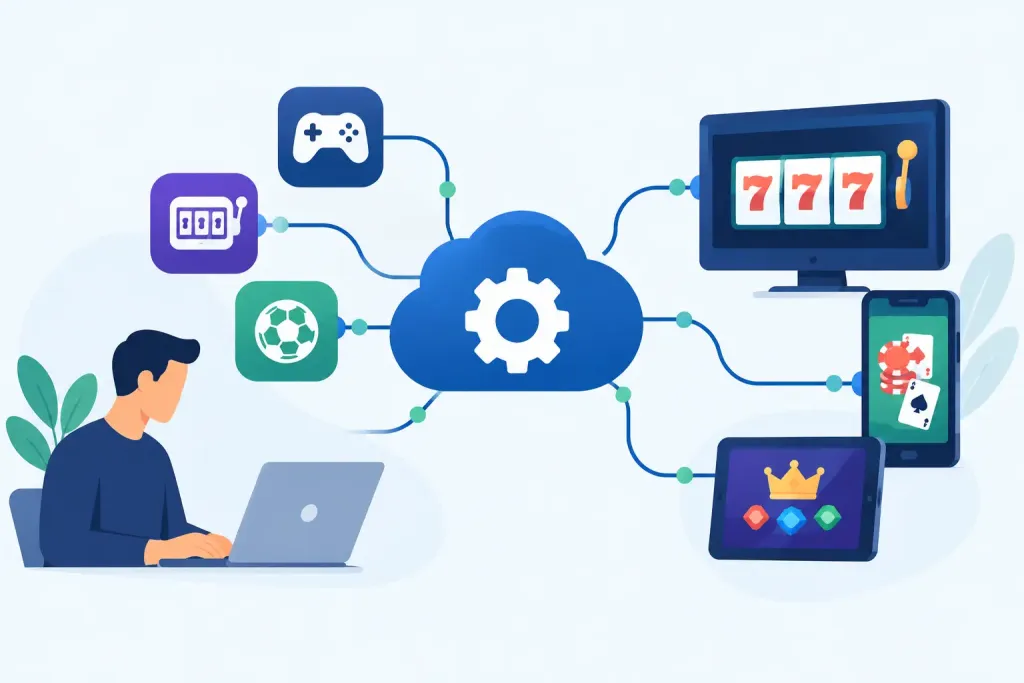
This requires more than an attractive interface. Operators need a unified architecture that connects player accounts, wallets, game and sportsbook content, payment processing, bonuses, reporting, risk controls, and administrative workflows. When these functions sit across incompatible systems, every new feature becomes an integration project. That slows product teams down and creates unnecessary points of failure.
The best platform strategy consolidates critical infrastructure without locking the operator into an inflexible product. A provider should offer defined deployment paths, clear API capabilities, configurable workflows, and the capacity to support custom development when the business case demands it.
Start With the Launch Model
The right technology choice depends on how you plan to enter the market. A startup seeking a fast branded launch has different priorities from an established operator replacing legacy infrastructure. Both need reliability, but their implementation requirements are not identical.
White-label platforms for speed to market
A white-label platform is often the practical choice when speed, budget discipline, and operational readiness matter most. The provider supplies the core gaming environment, while the operator launches under its own brand with its selected design, content mix, and commercial configuration.
This model can reduce the time and risk associated with building a platform from the ground up. It is particularly useful for businesses that want to validate a market, launch a regional brand, or expand into a new vertical without diverting resources into foundational software development.
However, white-label should not mean generic. Evaluate the level of control over branding, bonuses, user journeys, payment options, reporting, and content placement. A fast launch has limited value if the platform cannot reflect the operator’s acquisition strategy or customer experience standards.
API-first infrastructure for established operators
Operators with existing front ends, proprietary systems, or specialized product requirements may need an API-led solution instead. Unified API integration allows teams to access content, wallet functions, data flows, and platform services while retaining control over the customer-facing layer.
The trade-off is clear. API-led deployments can offer more flexibility, but they require technical capability on the operator side and a provider with clear documentation, stable endpoints, version management, and dependable integration support. Before committing, establish who owns implementation, testing, incident handling, and future maintenance.
Assess Content Aggregation Beyond Game Volume
A large game catalog is a useful commercial signal, but raw volume should not be the primary measure of content value. Operators need access to relevant suppliers, proven titles, and content that supports their target market, player segments, and acquisition channels.
Ask how content is integrated and managed. A single aggregation API can reduce the operational burden of connecting with multiple game studios individually. It can also make it easier to activate new providers, retire underperforming content, and maintain a consistent wallet and player session experience across the casino environment.
For sportsbook businesses, the same principle applies. The coverage that matters is not only the number of events available. It is the quality of odds feeds, market depth, settlement reliability, trading controls, live betting performance, and the ability to configure risk parameters around your business model.
Content strategy should remain flexible. A platform that lets operators respond quickly to market demand has a meaningful advantage over one that turns every content decision into a development ticket.
Treat Payments as Core Infrastructure
Payment localization is often where global growth plans meet operational reality. Players expect familiar methods, reliable deposits, timely withdrawals, and account balances that behave consistently across products. Operators need transaction visibility, fraud controls, reconciliation support, and the ability to manage multiple currencies without creating separate operational processes.
A capable provider should support secure payment gateway infrastructure that fits the jurisdictions and player profiles you intend to serve. That may include cards, bank methods, digital wallets, local payment options, and crypto-ready modules where permitted and commercially appropriate.
Do not assess payments only by counting methods. Review how the platform handles failed transactions, withdrawal approval flows, limits, suspicious activity, chargebacks, player verification triggers, and reporting. These details directly affect support volume, player trust, finance operations, and regulatory exposure.
Security must be built into the transaction architecture, not applied as a late-stage add-on. Encryption, access controls, audit trails, and clear permission structures protect both the operator and its players. Just as important, the provider should explain how it monitors platform health and responds when payment services or third-party dependencies fail.
Demand Back-Office Control, Not Just Dashboards
The back office is where an iGaming business is actually operated. A polished player interface cannot compensate for weak internal tooling. Operations teams need a central environment to manage users, wallet activity, bonuses, permissions, support actions, content configuration, reports, and risk controls.
Look for role-based access that reflects the way your organization works. Finance teams should not need the same permissions as customer support agents, and marketing teams should be able to configure campaigns without gaining unnecessary access to sensitive player data. Granular controls reduce risk while allowing departments to move faster.
Reporting also needs practical depth. Decision-makers require more than headline revenue figures. They need visibility into deposit patterns, player activity, bonus performance, game and sportsbook margins, affiliate attribution, transaction exceptions, and operational trends. The reporting framework should support daily decisions as well as longer-term planning.
A provider’s back-office design reveals whether it understands operator realities. If routine changes require engineering intervention, the platform may create a bottleneck precisely when the business needs to respond quickly.
Validate Performance, Security, and Support
High-growth gaming businesses experience pressure at predictable moments: major sporting events, promotional campaigns, seasonal spikes, new-market launches, and payment surges. Platform performance must hold under those conditions. Ask direct questions about uptime targets, capacity planning, monitoring, incident response, disaster recovery, and how the provider tests releases before production deployment.
Certification and compliance readiness also deserve close attention. Requirements vary by jurisdiction, product type, and operating structure, so there is no universal checklist that guarantees market access. Still, a provider should demonstrate mature security practices, documented processes, and experience supporting regulated environments.
Support is equally commercial. When an issue affects deposits, bet settlement, or player access, operators need clear escalation paths and accountable communication. Determine whether support is available when your market is active, how incidents are prioritized, and whether your team receives a named technical contact during implementation and ongoing operations.
Gameifylabs approaches this challenge as a unified infrastructure partner, combining turnkey platform capability, aggregation, payment infrastructure, and back-office management for operators that need to launch and scale without assembling a fragmented technology stack.
Choose for the Next Market, Not Only the First
A provider may satisfy the requirements of your first launch while limiting your next stage of growth. Before signing, map the likely expansion paths: additional brands, new currencies, localized payments, new content suppliers, sportsbook integration, mobile optimization, or entry into more regulated territories.
The goal is not to buy every possible feature on day one. Overbuying creates cost and complexity. The objective is to select an architecture that can add capability without forcing a platform replacement. That distinction matters when growth accelerates and technical decisions become expensive to reverse.
The strongest provider relationship is built on operational alignment. Your technology partner should understand what your team needs to launch now, what controls it must maintain after launch, and what the platform must withstand when the business gains traction. Choose the partner that gives your brand room to move with confidence.


DiscussionHave a technical perspective or question?Open discussion