

A casino operator adding sports betting is not simply adding another lobby tab. The decision changes wallet logic, risk exposure, compliance workflows, player segmentation, reporting, and the demands placed on every operational team. Knowing how to integrate sportsbook into casino infrastructure means designing one commercial product around two distinct gaming verticals, without creating friction for players or a fragmented environment for the business.
The strongest implementations treat sportsbook as a native part of the platform from day one. That requires more than access to odds feeds and a betting front end. It requires a unified account layer, controlled data flows, jurisdiction-aware configuration, and back-office visibility across casino and betting activity.
Start with the operating model, not the widget
A sportsbook can be embedded as a standalone supplier module, launched through a white-label environment, or built into a broader proprietary platform. Each route can work, but the right choice depends on the operator’s license footprint, internal technical capability, launch timeline, and degree of product control required.
A fast market-entry strategy often favors a turnkey sportsbook connected to a casino platform through a unified API. This reduces integration work and avoids the burden of maintaining odds, settlement logic, trading operations, and feed uptime internally. A more established operator may require greater control over front-end design, promotional rules, player journeys, and data ownership. In that case, the platform architecture must support deeper configuration rather than a simple redirect to a third-party betting experience.
The wrong starting point is choosing a sportsbook because it has the largest event catalog. Coverage matters, but operational compatibility matters more. If the provider cannot support your wallet model, reporting requirements, compliance workflow, or target markets, broad coverage becomes an expensive distraction.
Build a unified player account and wallet
The player should not need to understand which vendor powers each vertical. One registration, one identity profile, one balance, and one transaction history are the minimum standard for a connected casino and sportsbook offering.
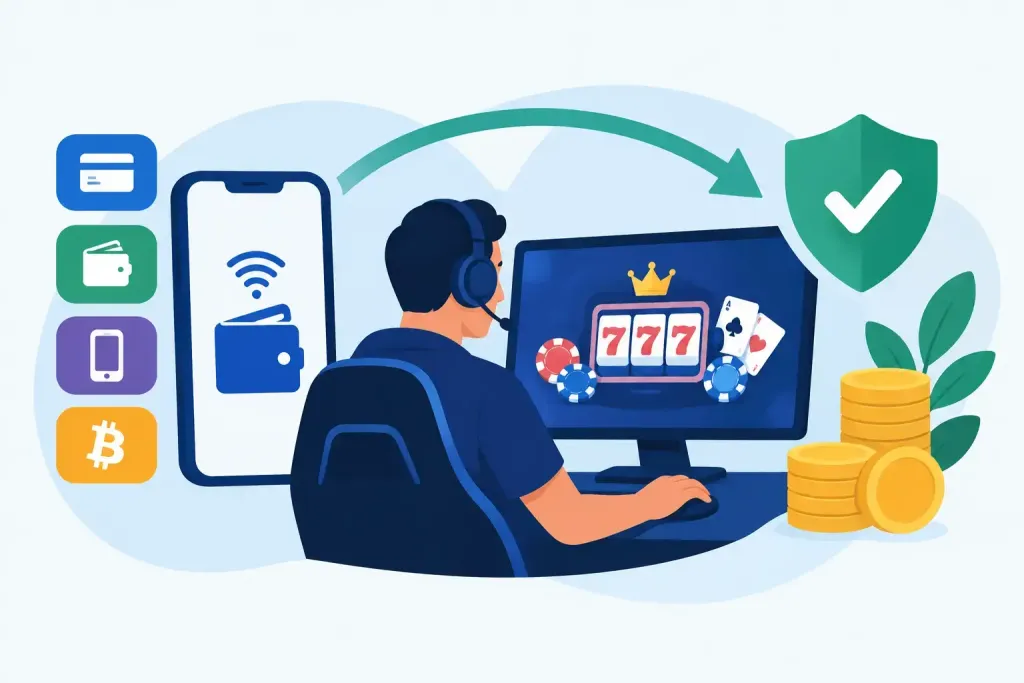
A unified wallet lets a player deposit once and use available funds across slots, live casino, table games, and sports wagers. It also gives the operator a consolidated view of deposits, withdrawals, bonuses, wagering, and exposure. Separate wallets introduce avoidable drop-off: players must transfer funds, may see delayed balances, and can question whether the products belong to the same brand.
Technically, this requires clear ownership of the wallet ledger. The platform should maintain an authoritative record of balances while the sportsbook receives the required authorization to reserve stakes, settle bets, reverse transactions, and process corrections. Every action needs idempotency controls so that retries, feed delays, or network failures do not create duplicate debits or credits.
The integration must also define what happens when a wager is pending. A stake placed on an unsettled bet should be reserved correctly, while casino play continues against the player’s available balance. This is a practical detail that directly affects customer support volume and financial reconciliation.
Treat bonus logic as a cross-vertical policy
Casino and sportsbook promotions are governed by different mathematics. A casino bonus may have wagering requirements, game contribution rules, maximum bet limits, and expiration terms. A sportsbook offer may apply to selected markets, minimum odds, free bets, or stake-back conditions.
Trying to force both into one generic bonus engine can create compliance and player-experience problems. Instead, maintain one promotional control center with product-specific rule sets. The player sees a coherent rewards experience, while the operator retains precise controls over eligibility, abuse prevention, liabilities, and reporting.
Connect through an integration layer built for change
Sportsbook operations are dynamic. Odds change, markets suspend, bets settle, events are postponed, and provider rules can vary by sport and jurisdiction. The API layer must handle this volatility without disrupting the core casino environment.
A practical architecture separates the presentation layer, account and wallet services, sportsbook integration services, content aggregation, payments, and back-office controls. This makes it easier to replace or add suppliers without rebuilding the entire platform. It also limits the blast radius when one external service experiences an incident.
Core API workflows should cover player authentication, balance checks, stake debits, payout credits, bet status updates, voids, reversals, and session management. Webhooks or event-driven messaging can keep bet states current, but they should be backed by reconciliation jobs that identify missing or inconsistent records. Real-time updates are valuable; verifiable financial records are non-negotiable.
For operators serving multiple regions, configuration should be market-specific. Event availability, odds formats, bet types, currencies, languages, deposit methods, bonus rules, and responsible gaming limits may all change by territory. Hard-coding those decisions creates slow releases and operational risk. A scalable platform places these controls in configurable back-office modules.
Put compliance and responsible gaming into the transaction flow
Sportsbook integration expands the operator’s regulatory obligations. Depending on the market, the platform may need to apply age and identity verification, geolocation, self-exclusion checks, deposit limits, source-of-funds reviews, anti-money laundering monitoring, suspicious betting detection, and audit-ready reporting.
These controls cannot sit outside the product flow as manual afterthoughts. A player who fails a required verification check must be blocked consistently across casino and sportsbook. Likewise, a self-excluded account cannot remain active in one vertical because the systems are poorly synchronized.
Risk decisions also need a clear hierarchy. The operator must be able to suspend an account, restrict a payment method, limit stakes, remove promotional eligibility, or block a jurisdiction across the full platform. The back office should record who made the decision, when it was made, the reason, and the actions applied.
For regulated launches, certification requirements should be considered before development starts. Game certification, sportsbook approval, data retention, reporting formats, and local technical standards can determine which suppliers and deployment model are viable. Retrofitting compliance after launch slows expansion and can force costly platform changes.
Design payments for both wagering behavior and local demand
Casino and sportsbook players may share an account, but their payment behavior is not always identical. Sports bettors often value fast deposits around live events, while casino users may make larger or more frequent transactions. A payment layer must support speed, fraud controls, clear withdrawal policy enforcement, and localized preferences.
The platform should support multiple currencies where legally appropriate and allow the operator to configure payment methods by market. Crypto-ready capability can be commercially relevant in certain territories, but it does not remove the need for transaction monitoring, identity controls, and jurisdiction-specific compliance. Payment flexibility without governance is not a growth strategy.
Withdrawal logic requires particular attention. When funds are tied to unsettled wagers, bonus conditions, chargeback investigations, or responsible gaming reviews, the platform needs defined rules and transparent player messaging. This protects the operator while reducing avoidable disputes.
Measure the combined product, not isolated verticals
A sportsbook-casino integration should be evaluated through player and operational data, not just gross gaming revenue by product. Track cross-sell conversion, time from registration to first wager, wallet transfer behavior if applicable, payment approval rates, retention by acquisition source, bonus cost, average revenue per active player, and support contacts tied to transaction or settlement issues.
Sportsbook adds another form of exposure management. Casino revenue is generally modeled through game mathematics and player behavior, while sportsbook results can move sharply around major events. Product, finance, risk, and marketing teams need one reporting environment where they can see the relationship between campaign activity, liabilities, deposits, and net revenue.
Segmenting players across both verticals also improves lifecycle marketing. A player who only bets on weekend football should not receive the same campaign as a high-frequency live casino player. The objective is relevant engagement, not more messages. Centralized player data makes those decisions possible while ensuring consent and communication preferences are respected.
Choose a technology partner that reduces operational debt
The question is not only how to integrate sportsbook into casino products, but how to operate the combined offer when volumes increase, suppliers change, and new markets come online. A fragmented stack can get an operator to launch, then become a barrier to growth through duplicate player records, manual reconciliation, inconsistent reporting, and slow release cycles.
A unified platform approach gives operators a stronger foundation: aggregated content access, sportsbook connectivity, payment infrastructure, centralized back-office management, and the APIs needed to extend the product. Gameifylabs supports this model with enterprise-focused infrastructure designed for branded iGaming deployments, operational control, and expansion across channels.
Before committing, test the integration against real operating scenarios: a voided bet after a payout, a player with an active casino bonus placing a sports wager, a payment reversal during a live event, a self-exclusion request, and a supplier outage. The platform that handles these moments clearly is the one that will support growth when the stakes are higher.
A successful combined product earns trust through consistency. Build the account, wallet, controls, and data model first, then let the sportsbook and casino experiences compete for player attention on the strength of the brand rather than the weakness of its infrastructure.


DiscussionHave a technical perspective or question?Open discussion