

A delayed launch rarely comes down to one missing feature. More often, it is the result of disconnected game integrations, payment providers that do not support a target market, manual back-office work, or an architecture that cannot absorb early growth. The iGaming platform provider you choose determines whether those dependencies become a controlled operating model or a constant source of friction.
For operators, founders, and platform owners, the decision is not simply about acquiring casino or sportsbook software. It is about selecting the technical foundation for player acquisition, transaction processing, content delivery, compliance workflows, and long-term expansion. The right partner reduces the number of moving parts your team must manage while preserving the control required to build a differentiated brand.
What an iGaming Platform Provider Should Deliver
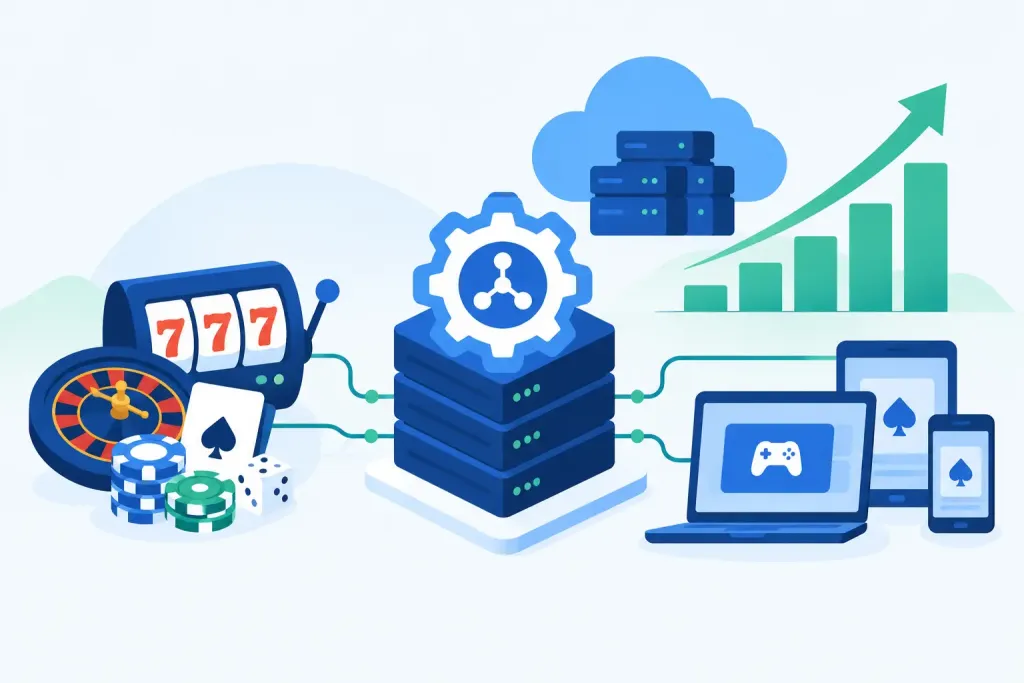
A serious platform provider supplies more than a front-end casino lobby or a catalog of games. It should provide the core infrastructure needed to operate a digital gaming business: player account management, wallet logic, reporting, promotions, content aggregation, payment connectivity, and administrative controls.
That foundation must work as a connected system. If game content, payments, bonuses, and player data sit in separate tools with separate support teams, routine operational decisions become slower and riskier. A unified platform centralizes the critical workflows behind an online casino, sportsbook, or hybrid gaming product.
The practical objective is straightforward: launch a branded experience without building every layer from scratch, while retaining the ability to configure markets, payment methods, content visibility, player rules, and commercial campaigns as the business evolves.
Turnkey deployment is not the same as limited control
Some buyers assume that a turnkey solution means accepting a generic product with little room for differentiation. That is only true when the underlying platform has been designed as a fixed template rather than a configurable operating environment.
A capable turnkey model provides speed without removing control. Operators should be able to apply their own branding, organize content, define player segments, configure bonus rules, manage user permissions, and connect the services needed for their operating model. Custom development may still be necessary for specialized user experiences or proprietary features, but the core infrastructure should already be proven and production-ready.
This is where the build-versus-buy decision becomes more precise. Building internally can make sense for companies with large engineering teams, highly specific product requirements, and the time to own every integration. For most market entrants and expanding operators, purchasing a configurable platform produces a faster path to revenue and a lower integration burden.
Evaluate the Architecture Before the Interface
A polished interface can make a strong first impression, but it does not reveal how the platform performs under transaction volume, provider updates, traffic spikes, or operational change. Decision-makers should examine the architecture behind the product.
Start with availability, performance, and scalability. The platform must process concurrent player activity, game round requests, deposits, withdrawals, bonus calculations, and reporting events without creating visible delays or reconciliation issues. This matters most during acquisition campaigns, major sporting events, or a successful content launch, when traffic rarely grows in a neat, predictable line.
Security must be embedded across the stack. Ask how player data is protected, how access is controlled, how transaction events are recorded, and how the provider manages monitoring and incident response. Certified software and disciplined security practices are not sales extras. They are core requirements when your business processes personal information and real-money transactions.
Data ownership and access deserve equal attention. Your teams need clear visibility into player behavior, financial performance, game performance, and campaign outcomes. A platform should provide meaningful reporting and back-office access, not force operators to depend on manual data exports whenever they need to make a commercial decision.
Content Aggregation Should Reduce Complexity
Content breadth influences acquisition and retention, but adding more studios is not automatically an advantage. Each direct provider integration can introduce technical maintenance, commercial coordination, release dependencies, and reporting complexity. That model becomes difficult to manage quickly.
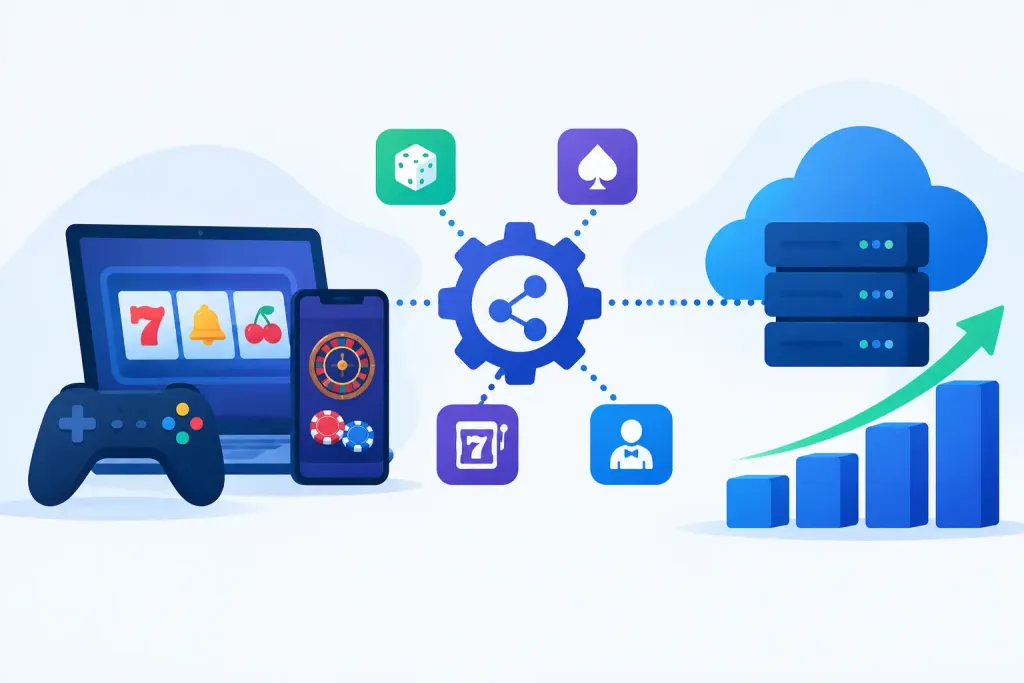
An iGaming platform provider with a unified aggregation layer can give operators access to a wide content portfolio through a single API. The benefit is not merely faster integration. It is a more manageable operating environment, with standardized technical connections and a centralized route for adding or managing content.
Quality matters as much as volume. Assess the relevance of available casino games, live dealer experiences, sportsbook capabilities, and specialty content for your planned audience. A platform built for international expansion should also support market-level configuration, allowing teams to tailor catalogs according to commercial priorities, local expectations, and regulatory limitations.
The key question is whether content can be managed as a strategic part of the product rather than as a growing collection of disconnected vendor relationships.
Payments Are an Operating Capability, Not a Checkout Feature
Payment performance has a direct effect on conversion, player trust, support volume, and cash flow. A platform may have compelling content and a strong brand experience, but it will lose value if players cannot use familiar payment methods or if withdrawal workflows create unnecessary delays.
Evaluate payment infrastructure through the markets you intend to serve. Multi-currency support, local payment options, fraud controls, transaction reporting, and crypto readiness may all be relevant depending on your commercial strategy. There is no universal payment mix. The correct configuration depends on player preferences, regulatory obligations, risk appetite, and the countries in scope.
A unified wallet is particularly important. It should allow players to move across relevant gaming products without fragmented balances or confusing transaction histories. For operators, centralized wallet management also improves reconciliation and gives finance and support teams a clearer view of account activity.
Payment integration must be treated as an early launch workstream, not a final-stage add-on. It often determines which markets can be activated first and how efficiently the business can scale after launch.
Back-Office Control Separates Launches From Operations
Launching is a milestone. Running the platform well is the business.
The back office is where operations teams manage player accounts, permissions, bonuses, payments, content settings, risk signals, and reporting. If these workflows are difficult to configure or require repeated technical intervention, commercial teams lose speed and support costs rise.
Look for granular user management, role-based access, configurable player controls, and reporting that serves different teams without exposing unnecessary functions. Marketing should be able to execute approved campaigns. Customer support should have the information needed to resolve player issues. Finance should be able to review transactions and reconcile activity. Technical teams should retain governance over sensitive platform settings.
This operational separation is especially valuable as the organization grows. What works when a founder and a small operations team manage every task will not support multiple markets, brands, or business units. A platform should make expansion more controlled, not multiply administrative overhead.
Ask Questions That Reveal Delivery Risk
Vendor demonstrations often focus on features. The stronger evaluation happens when you ask about delivery, ownership, and day-two operations.
Ask what is included in the initial deployment and what requires custom development. Confirm who manages game provider updates, payment changes, security patches, and infrastructure monitoring. Clarify support coverage, escalation procedures, expected implementation phases, and the commercial model for adding new markets or capabilities.
You should also understand integration boundaries. A single API can simplify access to content and services, but your team still needs clarity on documentation, testing environments, data flows, and responsibility when an external dependency fails. A credible provider will address these questions directly rather than treating them as implementation details to solve later.
At Gameifylabs, the all-in-one approach is built around this operational reality: operators need a platform, aggregation, payments, back-office control, and scalable technical support to work together from launch through growth.
Choose for the Next Market, Not Only the First Launch
The cheapest platform can become expensive if it requires replacement once transaction volumes increase, new currencies are needed, or a second brand enters the portfolio. Conversely, an enterprise-grade platform can be excessive for a narrowly defined initial launch if its complexity slows the business without solving a near-term need.
The right choice depends on your roadmap. Consider where you expect to operate in 12 to 24 months, which products you plan to add, how much control your team requires, and whether your current vendor model can support those moves without a major rebuild.
A strong provider should help you enter the first market quickly while giving you a credible path to broader content, localized payments, additional brands, and higher operational volume. The best next step is to map your launch requirements against your expansion plan, then select the infrastructure partner that can support both without forcing your business to start over.

DiscussionHave a technical perspective or question?Open discussion