
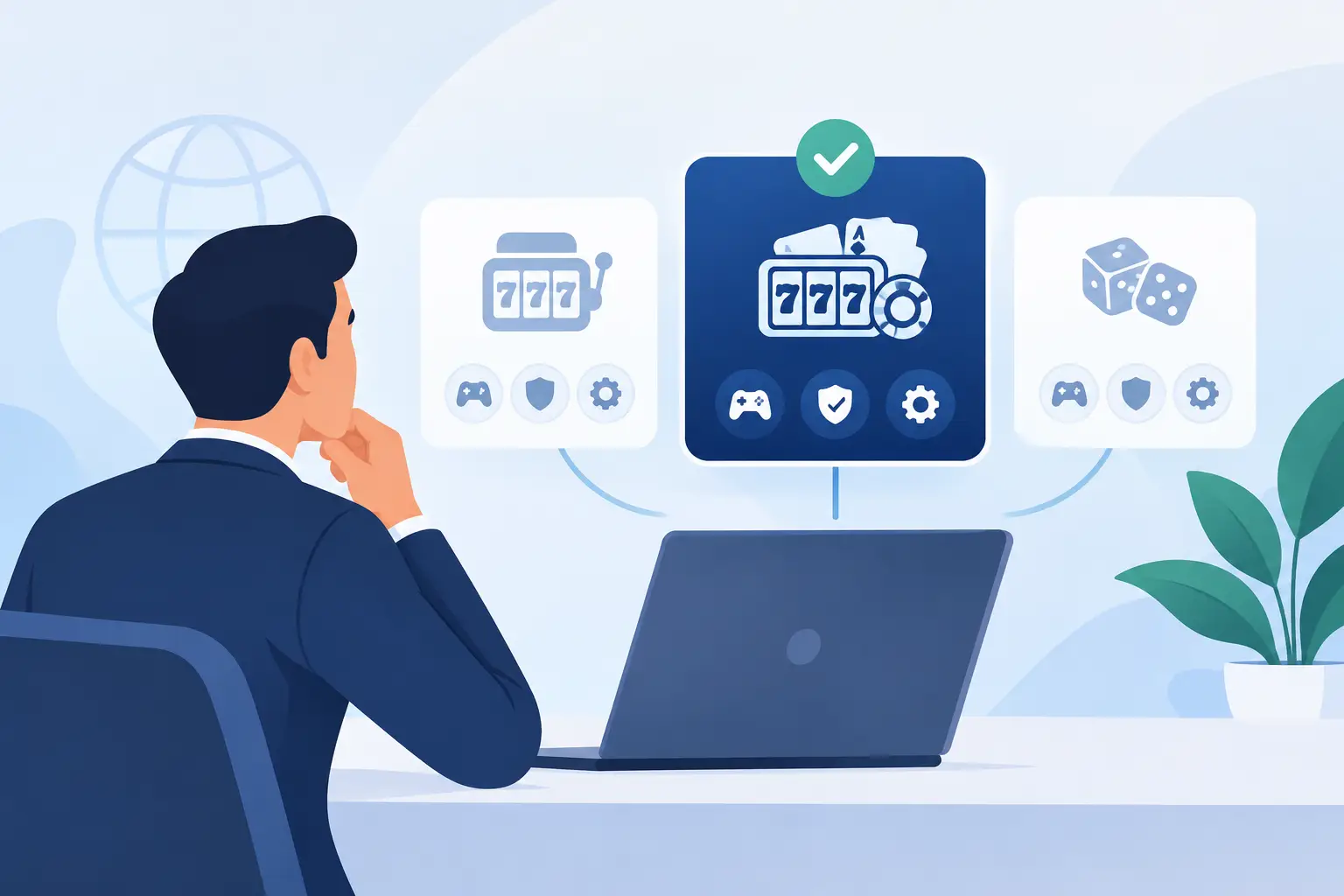
A delayed launch rarely comes down to one major technical failure. More often, it is the accumulated cost of disconnected game integrations, payment exceptions, limited back-office visibility, and a platform that cannot adapt when the business enters a new market. Selecting the right iGaming solution provider determines whether your team spends its time operating a growing gaming brand or managing preventable infrastructure problems.
For operators, platform owners, and founders entering the market, the decision is not simply about choosing software. It is about establishing the technical foundation for regulated operations, player experience, revenue collection, content delivery, and long-term expansion. The provider must support immediate deployment while giving the business enough control to evolve without rebuilding its core stack.
What an iGaming Solution Provider Should Deliver
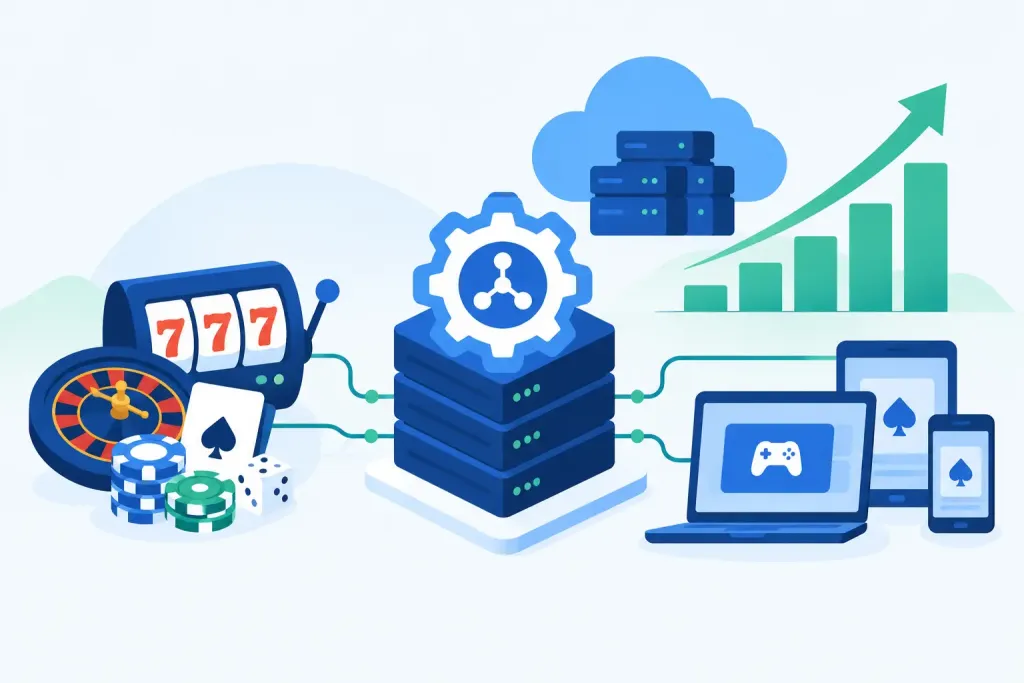
An iGaming solution provider should supply more than a front-end casino interface or a catalog of games. The real value lies in a connected operating environment: player account management, content aggregation, wallet logic, transaction processing, reporting, risk controls, and administration tools working from a unified architecture.
This matters because every additional vendor introduces another integration point, support process, data model, and potential failure path. A fragmented approach may appear flexible at the start, especially when a business wants to select individual components. But it can create high operational overhead once transaction volume, player numbers, and jurisdictional requirements increase.
A capable provider reduces this complexity through a platform that centralizes core functions. That typically includes a white-label casino or sportsbook platform, a unified API for gaming content, secure payment modules, an operator back office, and the ability to develop custom features when the standard product does not fit the business model.
The right scope depends on your internal capabilities. An established operator with an experienced engineering department may need API access and specialized modules. A new market entrant may need a turnkey platform with branded front-end delivery and managed technical operations. Neither approach is inherently better. The key is selecting an architecture that matches your launch plan without limiting future options.
Evaluate the Platform Before the Game Catalog
Game selection matters, but it should not be the first evaluation criterion. Operators can secure recognizable titles and still lose momentum when the underlying platform is slow, hard to administer, or unable to provide accurate operational data.
Start with the core platform architecture. Ask how player accounts, wallets, bonuses, game sessions, and transaction records are managed. These components must remain consistent during peak traffic, payment disruptions, promotional campaigns, and provider-side maintenance. A visually compelling front end cannot compensate for unreliable account balances or incomplete transaction reporting.
You should also assess how the platform performs across desktop and mobile environments. Mobile traffic is often central to acquisition and retention, but mobile optimization is more than responsive design. Game loading behavior, authentication flows, cashier usability, and back-office monitoring must support the way players actually use the product.
High availability should be supported by practical evidence, not generic claims. Discuss deployment architecture, monitoring procedures, incident response, data backup, disaster recovery, and support coverage. Ask what happens when a third-party game provider experiences latency, a payment route fails, or a campaign causes a traffic spike. The answers reveal whether the provider has designed for real operating conditions.
Back-Office Control Is a Commercial Requirement
A strong back office gives operations teams the ability to manage players, configure bonuses, review transactions, monitor performance, and respond to support cases without relying on engineering for routine actions. This is not merely an administrative convenience. It directly affects marketing speed, customer service quality, fraud response, and margin control.
Look for clear permission management as well. Different teams need different levels of access. Finance may require reporting visibility, customer support may need player account tools, and marketing may need campaign controls without the ability to alter sensitive platform settings. Granular roles reduce operational risk while preserving speed.
Assess API Strategy and Content Aggregation
Content aggregation is one of the clearest ways an iGaming technology partner can reduce time to market. Instead of developing and maintaining separate integrations for each studio, an operator can connect through a single API and access a broader portfolio of casino content.
The benefit is not only faster initial integration. A well-managed aggregation layer can simplify game onboarding, reporting, wallet consistency, and technical support as the content library expands. It also allows the operator to adjust its offering as market preferences change, without turning every content decision into a development project.
However, not every API is equally useful. Evaluate the quality of the documentation, the consistency of the integration model, available test environments, error handling, version control, and implementation support. An API that looks simple in a sales presentation can become expensive if it lacks reliable technical documentation or requires custom work for standard use cases.
Content breadth should be measured against the markets you intend to serve. A large game library is valuable, but availability, certification status, language support, promotional capabilities, and local player preferences matter just as much. An operator targeting multiple regions needs the ability to curate a relevant catalog, not just display the largest possible number of titles.
Payment Infrastructure Must Support Growth
Payments are where player experience, risk management, and market localization meet. A platform can attract players efficiently, but it cannot build sustainable revenue if deposits fail, withdrawals are delayed, or preferred local payment methods are unavailable.
Evaluate whether the provider supports multi-currency operations, local payment methods, card processing, alternative payment options, and crypto-ready workflows where appropriate for the business and jurisdiction. The objective is not to add every possible payment method. It is to create a reliable cashier experience for the markets that matter to your growth strategy.
Security and reconciliation deserve equal attention. Payment infrastructure should provide clear transaction states, audit trails, reporting, fraud controls, and the ability to investigate exceptions quickly. When finance and operations teams cannot reconcile deposits, withdrawals, bonuses, and wallet activity efficiently, the issue becomes more than a technical inconvenience. It affects trust, compliance readiness, and cash flow management.
A provider should also be transparent about payment dependencies. Some integrations may be available only in specific territories, subject to additional onboarding, or require separate commercial agreements. Clear expectations early in the process protect the launch timeline.
Security, Certification, and Compliance Readiness
Gaming businesses handle sensitive personal data, payment information, and high volumes of financial transactions. Security must be built into the platform architecture rather than added after launch.
Ask how data is protected in transit and at rest, how access is logged, how vulnerabilities are monitored, and how the provider manages infrastructure updates. Understand its approach to identity controls, data retention, audit reporting, and incident management. Enterprise-grade security is not a single feature. It is an ongoing operational discipline.
Certification and compliance requirements vary by jurisdiction, product type, and market strategy. A provider cannot remove the operator’s regulatory responsibilities, but it should supply technology that makes those responsibilities manageable. This may include reporting capabilities, player management tools, transaction history, responsible gaming controls, and adaptable configuration for market-specific requirements.
Avoid treating compliance as a late-stage checklist. If your intended market requires particular certification standards, game restrictions, reporting formats, or data handling procedures, validate platform readiness before committing to a launch schedule. Retrofitting core functionality after commercial planning has begun is slower and more expensive than choosing suitable infrastructure from the start.
Compare Deployment Models and Ownership Boundaries
Turnkey and white-label solutions can significantly reduce the time and capital required to launch. They are particularly effective when the priority is entering the market with a branded product supported by proven platform components. The trade-off is that customization may be governed by the provider’s roadmap, implementation capacity, and shared platform standards.
A more customized build can offer greater differentiation and control, but it requires clearer product governance, a larger budget, and realistic expectations about delivery time. The strongest providers can support both paths: a dependable core platform for speed, plus custom development where unique workflows or brand requirements justify the investment.
Before signing, define ownership boundaries in practical terms. Clarify who manages hosting, platform upgrades, content provider relationships, payment integration maintenance, data access, support escalation, and feature development. Also establish what happens if your business enters a new market, adds a sportsbook, or needs to migrate components later.
Gameifylabs approaches this challenge as a unified technology partnership, combining turnkey platform delivery, aggregation, payment infrastructure, and custom software capability for operators that need a faster path to a scalable gaming operation.
Choose for Operations, Not Just Launch Day
The best platform demonstrations make launch look easy. Your due diligence should focus on the months after launch, when support demand rises, payments require reconciliation, campaigns become more complex, and leadership needs accurate data to make decisions.
Ask the provider to show the workflows your team will use every day: creating a player account, reviewing a withdrawal, setting permissions, adding content, investigating a failed transaction, exporting reports, and handling a service issue. These operational details expose platform quality more clearly than a polished home page.
A successful iGaming business needs infrastructure that can absorb change without creating friction across every department. Choose a partner that gives your team control over the essentials, provides clear accountability when issues occur, and has the technical depth to support the next stage of your growth, not only the first day your brand goes live.


DiscussionHave a technical perspective or question?Open discussion