

Launching with ten game titles is easy. Launching with hundreds of certified casino games across markets, currencies, devices, and providers – without slowing operations – is where most platforms get exposed.
That is the real question behind how to integrate casino content. It is not just about connecting a game feed. It is about building a content layer that supports uptime, jurisdictional compliance, player experience, reporting, payments, and long-term commercial flexibility. For operators and platform owners, the integration model you choose will shape speed to market and operating margin long after launch.
What casino content integration actually involves
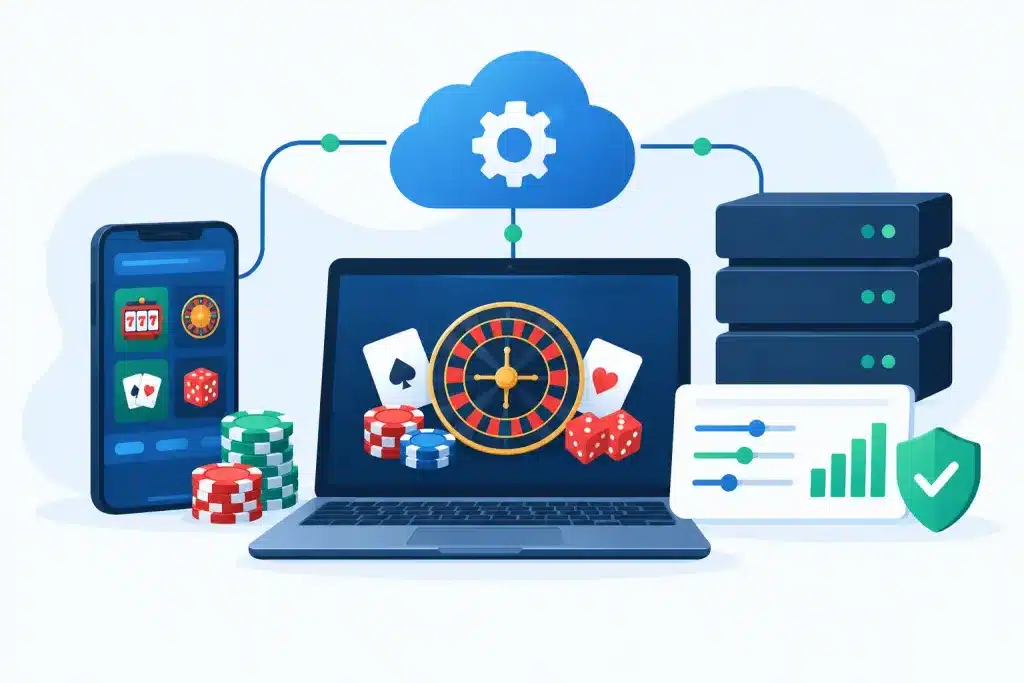
Casino content integration is often described too narrowly. In practice, it includes the technical connection to game studios or aggregators, but it also covers session management, wallet connectivity, bonus compatibility, localization, game metadata, certification mapping, reporting flows, and back-office controls.
If any of those layers are weak, content access alone does not help much. A large portfolio can still create friction if game launch times are inconsistent, category mapping is poor, or the wallet logic breaks between providers. This is why mature operators think in terms of infrastructure, not just content volume.
The integration path usually comes down to three models. You can integrate directly with each provider, work through an aggregator, or adopt a turnkey platform with content already connected. Each model can work, but the right choice depends on your launch timeline, internal engineering capacity, regulatory footprint, and appetite for vendor management.
How to integrate casino content without creating operational drag
The fastest way to make this decision is to stop treating content as a standalone procurement task. It should be evaluated as part of your broader platform architecture.
If your team is pursuing direct integrations, you gain more commercial control and potentially better margin structure with specific studios. The trade-off is complexity. Every provider may have different API conventions, release schedules, certification requirements, reporting formats, and support workflows. That can be manageable for large teams with strong product and engineering resources, but it is rarely the fastest route for new market entry.
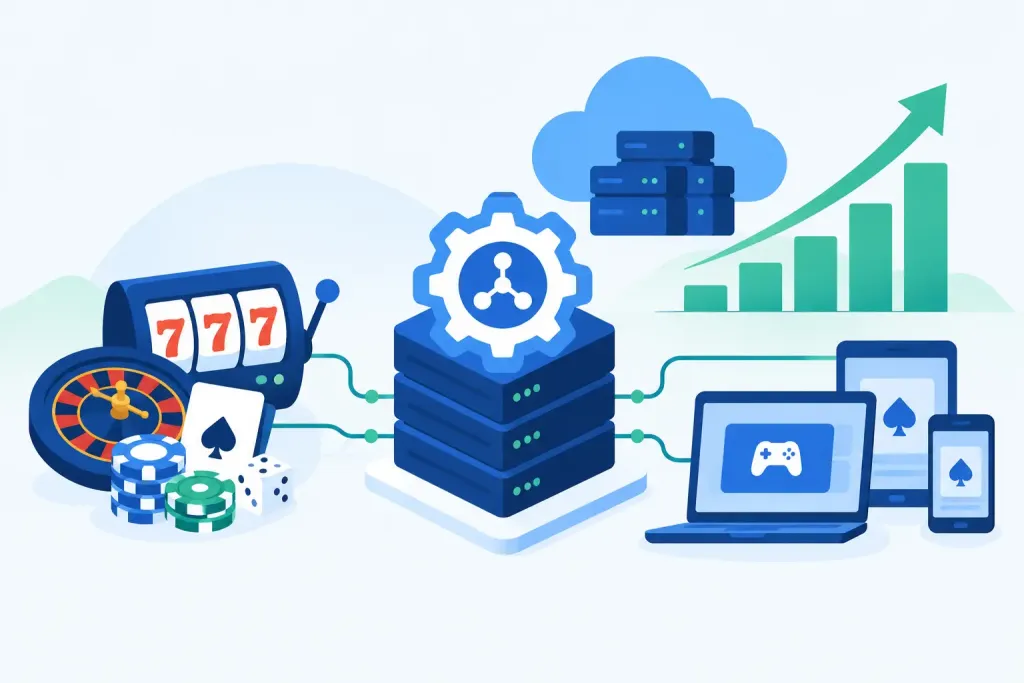
An aggregation layer reduces that burden significantly. Instead of negotiating and building against dozens of providers, you connect through a single API and access a broader game portfolio from one technical point of entry. For many operators, this is the most efficient balance of reach and speed. The trade-off is dependence on aggregator quality. If the infrastructure is unstable or the mapping between providers is inconsistent, issues multiply quickly.
A turnkey platform goes one step further. Content is already integrated into a broader system that includes wallet, player account management, back office, payment infrastructure, and administrative controls. This is usually the strongest option for businesses that want rapid deployment and reduced vendor fragmentation. The main consideration is flexibility. Some turnkey environments are harder to customize than others, so platform depth matters as much as launch speed.
Start with the wallet and session architecture
Before selecting content, verify how the wallet and game sessions are handled. This is where many integration projects look complete on paper but fail under real traffic.
A unified wallet experience matters because players do not care which provider serves the game. They expect balances, bonuses, transaction histories, and session continuity to work consistently across the lobby. If the content stack creates separate wallet logic, delayed balance updates, or reconciliation problems, support overhead rises fast.
Session architecture is just as critical. You need stable token handling, low-latency launch flows, secure handshakes between platform and game provider, and clear recovery behavior if a session drops. These are not edge cases. In live gaming environments, interrupted sessions, duplicate rounds, and unresolved bet states can become operational and regulatory issues.
Strong infrastructure keeps this invisible to the player and manageable for operations. Weak infrastructure turns every provider incident into a customer support event.
Provider coverage is not enough
A common mistake is choosing a partner based only on the number of providers in the portfolio. Large catalogs look impressive, but the useful question is whether the content is market-ready for your business model.
That means checking certification status by jurisdiction, supported currencies, language localization, mobile performance, RTP configuration options where allowed, game metadata quality, and promotional compatibility. You also need to understand how quickly new provider releases are added and whether deprecated titles are removed cleanly.
In other words, relevant coverage beats raw volume. Five hundred games that are approved, well categorized, and stable in your target market are more valuable than five thousand titles with gaps in compliance or poor front-end presentation.
How to integrate casino content for multiple markets
If you are entering more than one market, the integration strategy needs to account for regional variation from day one. This is where short-term decisions create expensive rewrites later.
Different jurisdictions may require different game sets, reporting structures, responsible gaming controls, and certification standards. Payment preferences also change by market, and that affects conversion just as much as content. If your content layer is not connected cleanly to your payments, fraud checks, and back-office logic, expansion becomes slower with each new territory.
This is why enterprise operators prioritize modular architecture. The best setups centralize core services such as wallet, player management, and reporting, while allowing market-level configuration for content availability, language, currency, and compliance rules. That approach protects speed without forcing a one-size-fits-all deployment model.
For a B2B technology partner, this is where a unified API and platform strategy creates real value. It reduces the number of moving parts your team needs to manage while keeping expansion technically disciplined.
The back office is part of the integration
Casino content should never be evaluated only through the front end. Your operations team will live in the back office, and if the content stack is weak there, it will show up in slower response times, poor reporting, and limited commercial control.
You need visibility into game performance, provider activity, player sessions, bet and win data, rollback events, and error patterns. Bonus management should align with content rules, and the support team should be able to resolve disputes without escalating every issue to an external vendor.
Back-office depth also affects growth. If your team cannot segment content performance by market, device, provider, or player cohort, optimizing the lobby becomes guesswork. The integration should support decision-making, not just game launch.
Security, compliance, and uptime are non-negotiable
Operators rarely lose momentum because they lacked content options. They lose momentum because platform reliability, compliance readiness, or payment trust broke at the wrong time.
That is why casino content integration should be reviewed through an enterprise lens. Ask how provider communications are secured. Review logging and auditability. Confirm how incidents are escalated. Understand failover behavior and uptime commitments. Check whether the content infrastructure aligns with your certification and data protection requirements.
There is also a practical commercial point here. Every unstable connection creates downstream cost across support, finance, risk, and retention. Reliable integration is not just a technical standard. It is part of margin protection.
Choosing the right integration partner
The best partner is not necessarily the one with the biggest catalog or the loudest claims. It is the one whose architecture fits your operating model.
If you have an experienced internal platform team and a narrow provider strategy, direct integration can make sense. If you need broad content access with lower engineering overhead, aggregation is usually the smarter route. If your priority is fast launch with consolidated infrastructure, a turnkey platform is often the strongest commercial choice.
What matters most is whether the provider can support launch and scale with the same level of discipline. That means stable API performance, clear documentation, responsive technical support, certified infrastructure, and operational tooling that does not force your teams into manual workarounds.
Gameifylabs approaches this challenge as an infrastructure problem first and a content problem second. That distinction matters because operators do not just need more titles. They need a content delivery model that works under real growth conditions.
A strong casino content strategy is less about adding games and more about removing friction from every layer around them. Choose the integration model that protects control, shortens launch cycles, and keeps your platform stable when volume starts to climb. That is how content stops being a feature and starts becoming an asset.

DiscussionHave a technical perspective or question?Open discussion